“When you pray, go into your room”: Discovering interior prayer
Saint Teresa of Avila understood well what interior prayer is. We can even say that she was a “master” in the domain of interior prayer, and that she remains so. Certainly, she was writing for Carmelite nuns, but she also wrote for every soul that seeks interiority. And every Christian must be a soul that seeks interiority. Each of us must be a place of prayer: it is in the innermost part of ourselves that the place of encounter with God is found.
So let us try to understand what Jesus is telling us here: “When you pray, do not stand on the street corners to be seen by others.”[1] (…) There is always a risk of seeking ourselves in prayer; it is so hard for us to be alone with God. And yet prayer is precisely that—to be alone with God. That is what Jesus says here, “But when you pray, go into your room, close the door and pray to your Father, who is in secret”—that is, in innermost part of yourself.
There is always a risk of seeking ourselves in prayer; it is so hard for us to be alone with God. And yet prayer is precisely that—to be alone with God.
Jesus continues, “And when you pray, do not keep on babbling like pagans, for they think they will be heard because of their many words.” In other words, do not make your heart a public arena. In fact, we can sometimes be our own spectator; and when that happens, our prayer is no longer addressed to God. We must flee from the external public arena, but we must also flee from the internal public arena. We must flee all spectators, whether they be others or ourselves. Prayer places us beyond all spectators, so that we can be in the secret of the Father, in order to discover his secret of love.
And when you pray, do not keep on babbling like pagans, for they think they will be heard because of their many words. 8 Do not be like them, for your Father knows what you need before you ask him.
9 “This, then, is how you should pray:
“‘Our Father in heaven,
hallowed be your name,
10 your kingdom come,
your will be done,
on earth as it is in heaven.
11 Give us today our daily bread.
12 And forgive us our debts,
as we also have forgiven our debtors.
13 And lead us not into temptation,
but deliver us from the evil one.’
14 For if you forgive other people when they sin against you, your heavenly Father will also forgive you. 15 But if you do not forgive others their sins, your Father will not forgive your sins.
Jesus therefore asks two things of us: to avoid all external spectators—praise, flattery—and to avoid the inner spectator. And to do this, we must not repeat ourselves indefinitely but rather say the “Our Father.” Jesus is not excluding the saying of the Our Father from our interior, secret prayer. And we can add right away that he is not excluding our Hail Mary’s either. This is important: Jesus doesn’t want us to empty our minds. This is trendy today, with Zen, transcendental meditation, etc. It’s even gaining ground in convents, even among contemplatives—or at least, those who call themselves contemplatives, because it’s directly opposed to the Gospel and to contemplation. It can be a psychological exercise for those with a vivid imagination. But there are other ways to calm one’s imagination, and it’s important to be aware of the power we can have over the imagination. In any case, the world we live in greatly stimulates the imagination: going often to the movies, watching television for hours, wildly fuels our imagination.[2] And this can only externalize us. With television, the public arena enters our homes. Jesus would tell us today: “When you go into your room, turn off your television [or your cell phone!], to enter into the innermost part of yourself. Do not let in an outside gaze that necessarily prevents you from being fully in the presence of the Father.”
Jesus does not give us a method for prayer. There are methods of meditation, but prayer is more than meditation; it is much more interior. It is the deep breathing of our spiritual and religious soul that adores; the deep breathing of the child of God within us, rising to its source, to the Father, through the heart of Jesus. Jesus, therefore, does not give us a method; and Saint John, who is the most introspective of the Apostles, does not give us a method either in his First Epistle. We had to wait for the era of methods before we began to speak of “methods of prayer.” Prayer is both something much more natural than a method and something divine, supernatural; it is beyond methods. One might object: “But I don’t know how to pray.” In fact, all it takes is for us to enter our inner “room” (we close our eyes, plug our ears, and remain quiet) to try to have an inner prayer, that immediately our imagination begins to run wild—since nature abhorring a vacuum. If it’s before lunch, we start thinking about what we’re going to eat, or we think we’ve forgotten this or that, that we’ve forgotten to run this or that errand. And since we have the intention of entering into the secret of our heart, we begin to fight against all these imaginations, which Saint Thérèse compares to a flock of pigeons. If we start chasing after the pigeons, after a while all that is left are feathers; then we might as well just make a pillow out of them and fall asleep. Our mental prayer will then end up in a perfectly tranquil prayer of quiet! Saint Francis de Sales humorously said that it is better to sleep on the heart of Jesus than to stay awake everywhere else. So, it was our intention to pray, but we were tired and fell asleep. We must tell ourselves that all is not lost; it is for the Lord.
Our imagination, in fact, when it is too exuberant, is undoubtedly the major enemy of interior prayer, of what has been classically called, since Saint Teresa, oraison.[3] How can we avoid this “flight of the pigeons”? How can we achieve true interiority? Saint Thomas tells us that, over the imagination, man has only “political” power, that is to say, indirect power. Being attentive to something prevents our imagination from running away, but we do not have immediate control over it. And in today’s world, it is even more difficult, because our imagination is constantly alerted, awakened, excited, even violated: all violent films excite and violate our imagination. All films that exalt lust and sexual instinct violate our imagination. How difficult it is to maintain an imagination that is not ruled by our world today! How can we do it? And how can we enter into mental prayer?
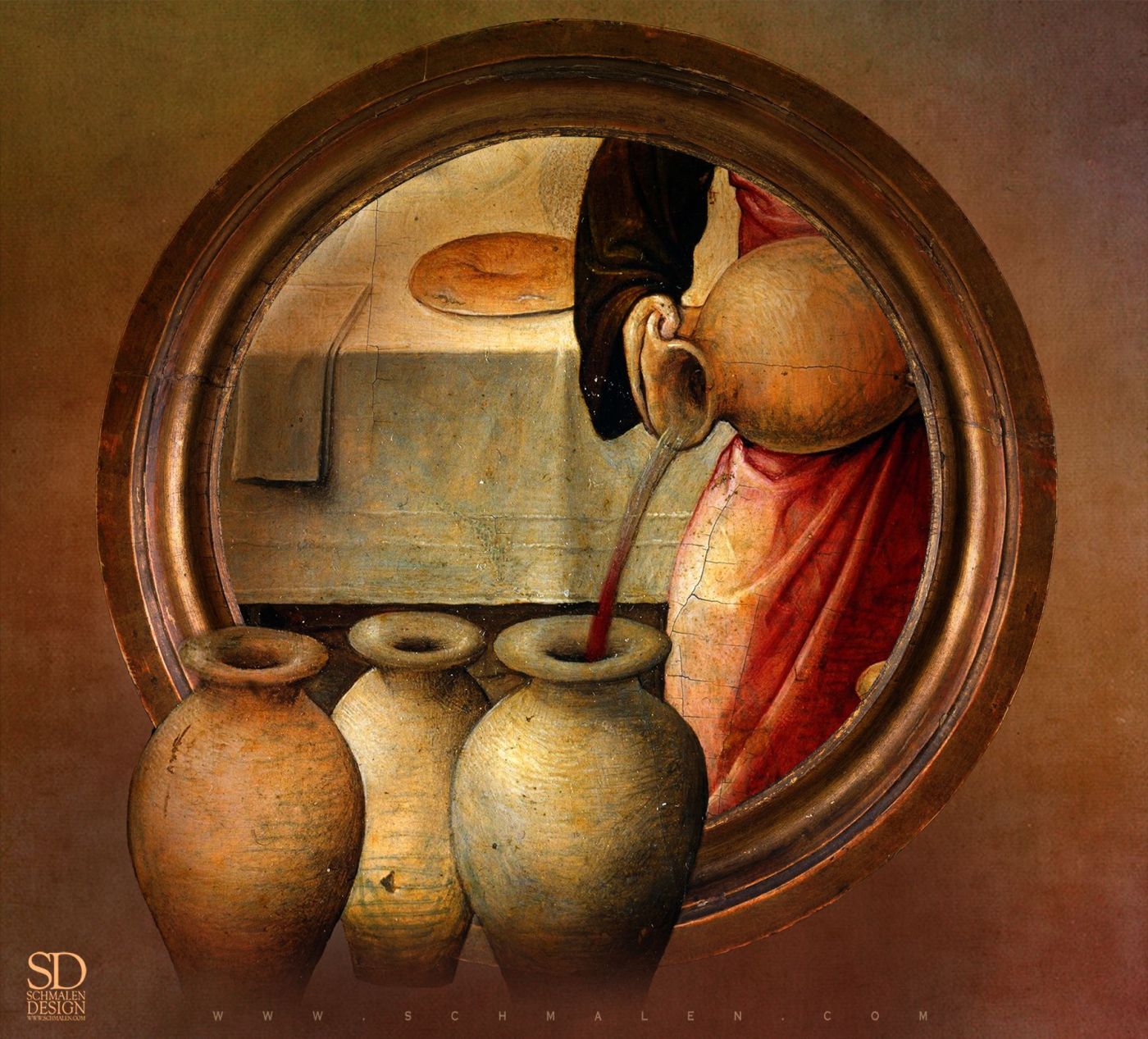
Let us recall how Saint Thomas Aquinas speaks of oraison. He says that silent prayer is the wedding of our soul with Jesus; and he says this for every Christian. He does not at all say that it is reserved for contemplatives Sisters. Every Christian must be a contemplative, that is to say, must experience this secret mystery of an encounter with the Father and with Jesus. For Saint Thomas, this is the deepest meaning of the wedding at Cana, this is what it signifies mystice, he says,[4] that is to say, in a completely interior way. The mystice of Saint Thomas corresponds, in fact, to the deepest meaning of the word of God. The word of God should normally transform our hearts and culminate in love. And the account of the wedding at Cana, which is the “first sign”[5] that Jesus gives us of his love, of his loving, merciful omnipotence, is for Saint Thomas the teaching of silent prayer—I would almost want to say that it is like a “sacrament” of prayer. It is very beautiful that Jesus began his apostolic life by teaching us interior prayer.
What is silent prayer? It is the transformation of our heart into the heart of Christ. It is the encounter of the bridegroom and bride[6]—in other words, it is a loving encounter.
What is silent prayer? It is the transformation of our heart into the heart of Christ. It is the encounter of the bridegroom and bride[6]—in other words, it is a loving encounter. And what is a loving encounter? It is attuning our heart to the heart of the one we love; it is desiring a loving correspondence, a perfect harmony between our heart that wants to love and the heart of the one who loves us. Such an encounter, which takes place in many ways, cannot be prepared. A diplomatic meeting requires a lengthy preparation; it requires reflection. When it is a meeting with someone we love very much, it is something else entirely. Perhaps engaged couples prepare for their meetings. But when we truly love each other, when we’re beyond the engagement stage, we no longer prepare. Immediately, as soon as we encounter someone we love, we know that we love them and that they love us, and we tell them that we love them. And we can say it endlessly; it’s not rehashing. It’s simply saying, spontaneously, that we love. We are invited to this wedding of our soul with Christ. Every day, we are invited to this wedding. The Gospel tells us: “The kingdom of heaven is like a king who prepared a wedding banquet for his son. (…) The wedding banquet was ready, but those who were invited were not worthy.”[7] Every day, alas, we say: “I have oxen to buy; I have this job to do; I have this person to see.” And the day passes. In the evening, we are very tired: “I didn’t pray today.” Yes, we refused the invitation! We should write on our schedule: “At such and such a time, invitation from Jesus.” If an important person, if a great scholar, invited us, we wouldn’t miss the appointment… But Jesus invites us every day to Mass, to Communion; and beyond Communion, to silent prayer.
~ AFC 1988 “Seigneur, apprends-nous à prier”
[1] Matt 6:5-14.
[2] This was in 1988 before cell phones. What would he say about the universal addiction to screen time today! [Transl.]
[3] Often translated as “mental” or “silent prayer” in English.
[4] See Commentary on the Gospel of Saint John, nos 338 et 343.
[5] Jn 2:11.
[6] Cf. SAINT THOMAS, op. cit., n° 343.
[7] Mt 22:2 and 8.
 Father Marie Dominique Philippe, O.P.
Leave a comment