In adoration we worship for all humanity and for the whole universe. As soon as we adore and our adoration is true, as soon as we recognize that we are in total dependence on God, then we are, in fact, at the center of the whole universe. We always worship as part of the universe, and that is why our bodies are not foreign to adoration. Worship implies a position of prostration in which our body recognizes its absolute dependence on God. This must help us; our body must somehow assist our soul to allow our adoration to be truer and deeper, at the heart of the universe and of all humanity.
We must therefore never adore for ourselves alone, but we must do it for all humanity today, to put it back into dependence on God. It is because of this “cosmic” dimension that adoration takes place on the “high places” and in the Temple of Jerusalem.[1] These two aspects are significant: adoration is done on the high places to show that the whole universe must be offered, and in the Temple of Jerusalem to show that all the work of man must also be offered. There is therefore a very close link between adoration and work, since in adoration we recognize that our work is for God alone and that we offer it in holocaust for him. It is an interior holocaust in which everything is “burned up” for God, so that there is nothing left but the presence of God. We are then in him, surrendered into his hands, entirely relative to him, taken into his care. God can, in fact, only take care of us, take us “into his hands,” if we adore him, because then we recognize that everything comes from him, and we place ourselves into his hands. For this reason, only someone who adores can be docile to the Holy Spirit—this is adoration in spirit and in truth, an adoration of love. The Holy Spirit can only move us if we adore, because then we remove everything in us that could be a resistance to him.
” This adoration in spirit and truth must maintain an attitude of surrender and trust within us. This is important today, especially if we have temperaments that are a little anxious, which is the universal illness today: we are all more or less anxious, and at times we feel it more particularly. Only divine abandonment can allow us to find inner peace. But we cannot be abandoned to God without adoration. ”
Where can this resistance come from? From all our opinions, our judgments, our obsession for systematizing things, our methods, our old ways of doing things, so many things that are always obstacles to the action of the Holy Spirit because they come from us and are our “property” whereas the Holy Spirit is the Father of the poor. We are poor only thanks to adoration, so we understand that adoration is a marvellous call to the Holy Spirit, a call by which we offer ourselves to God who takes us, a call allowing the fire of heaven to take hold of the victim and set him aflame.[2]
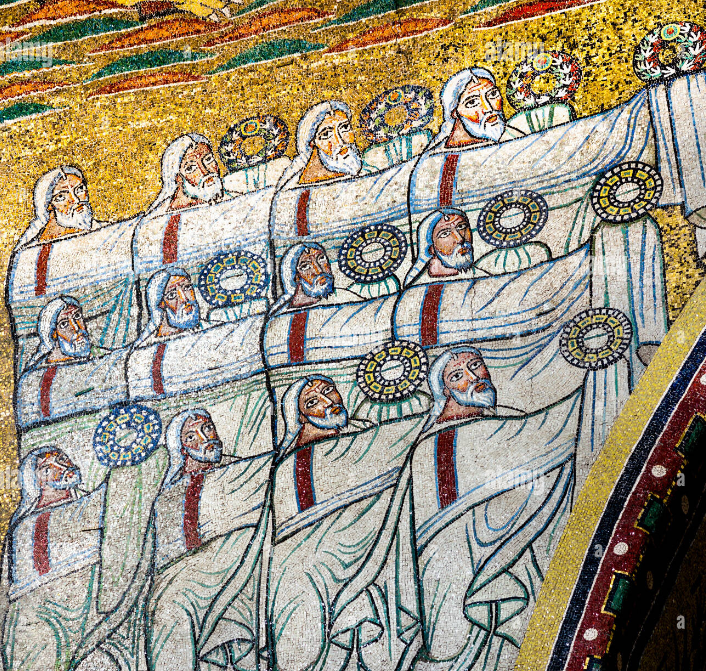
Adoration is therefore done in the name of the entire human community and in the name of the entire universe. We adore as kings of the universe—as having this capacity to offer our will to God—and we throw down our crowns. And that is why adoration is so close to contemplation, to silent prayer. It is impossible to separate what God has so profoundly united—adoration and silent prayer or contemplation. Both are a work of love. It is the Holy Spirit in us, it is Jesus who transforms our heart. This love which is freely given to us transforms what we are as creatures of God. That is why the first work of love, the first work of the Holy Spirit in us, is to teach us to offer ourselves to God and to place ourselves in the hands of the Father, in manus tuas.[3]
This adoration in spirit and truth must maintain an attitude of surrender and trust within us. This is important today, especially if we have temperaments that are a little anxious, which is the universal illness today: we are all more or less anxious, and at times we feel it more particularly. Only divine abandonment can allow us to find inner peace. But we cannot be abandoned to God without adoration. Otherwise we confuse psychological abandonment with divine abandonment. We must understand that psychological abandonment is not a virtue, whereas divine abandonment is truly the fruit of God’s love in us.
[1] Cf. Jn 4:20-21.
[2] Cf. 1 Kings 18:38.
[3] Lk 23:46; Ps 31:6.
 Father Marie Dominique Philippe, O.P.
Leave a comment